Clients who don't show up: how to reduce no-shows (and take deposits in your country)
Reminders, a cancellation policy and deposits: what actually reduces missed appointments, with templates to copy and how to take a deposit in your country.
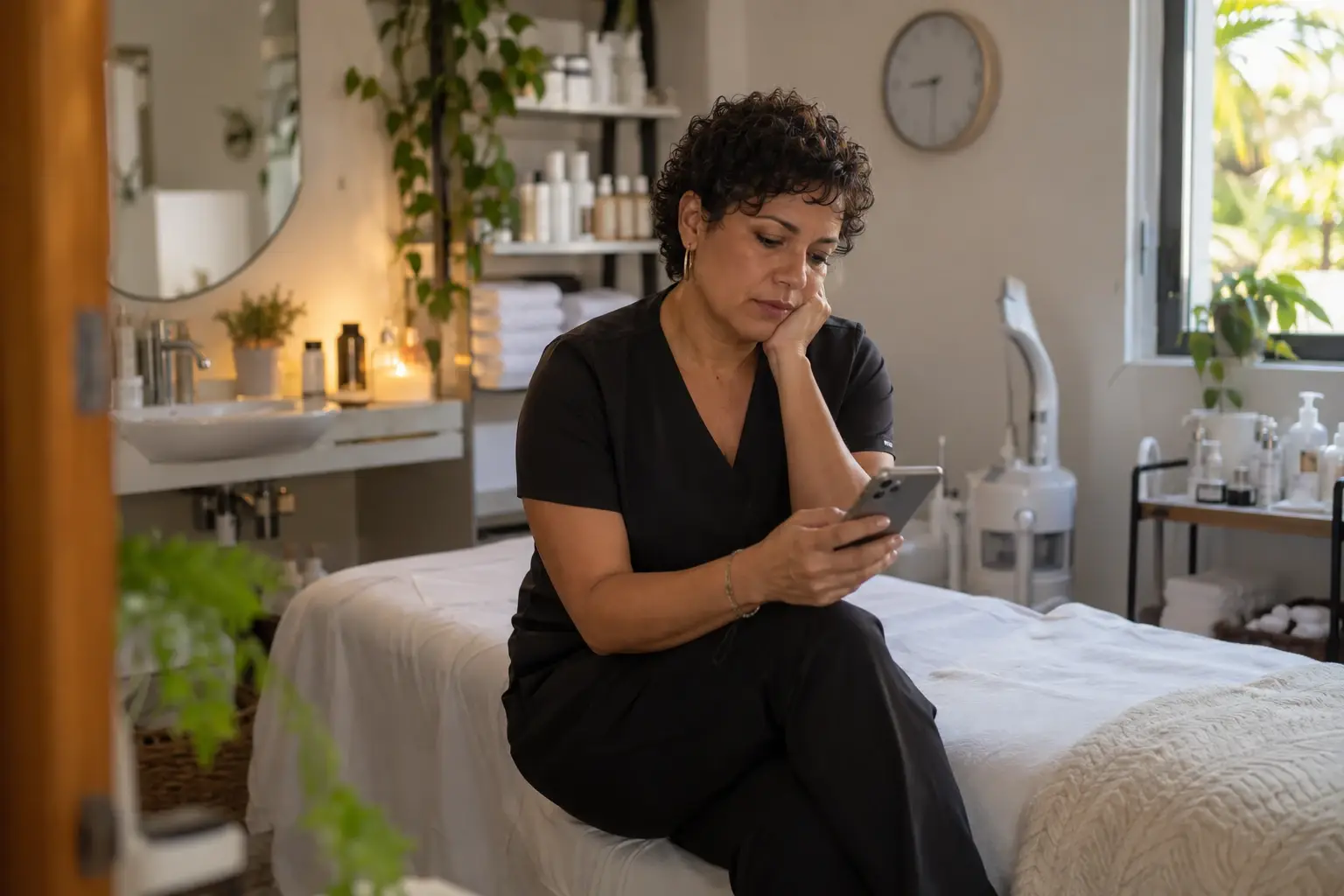
You got everything ready, held the time slot and maybe even turned someone else away. And the client doesn't show up. No text, no call. If it happens often, it isn't bad luck: it's one of the most common complaints of anyone who works by appointment, from a barbershop in Miami to a clinic in Houston.
In this guide you'll see what the research says (not the numbers that float around without a source), what actually works, templates you can copy and how to take a deposit in your country: Zelle or Venmo in the United States, a bank transfer or Mercado Pago in Mexico and Argentina, Bre-B or Nequi in Colombia, Yape or Plin in Peru.
How much do no-shows cost you?
You lose per month: $390. You lose per year: $4,680.
104 appointments a year you didn't get paid for
Rough math: price × missed appointments × 52 weeks. It doesn't count the supplies you used or the client who couldn't book that slot.
How many appointments get missed (what has actually been measured)
Healthcare is where this has been measured best. A review of 105 studies found that about 23% of appointments are missed on average (Health Policy, 2018); in primary care, another review of 26 studies puts it at 15.2% (British Journal of General Practice, 2021). For salons, barbershops or nail studios there is no solid study: the “15 to 25%” figure you see online comes from software companies' reports, with no sample or method.
What you do find is owners describing their week. “Last month we had 13 no-shows. That’s roughly 25% of our slots,” someone wrote in a small business forum; when they suggested charging for no-shows, their uncle replied: “How can I say this to my customers? It’s too rude.” (Reddit). In a Mexican small business forum, someone else put it simply: charging a deposit to hold an appointment isn't fun, but it makes people respect your time (Reddit).
Why people don't show up
The number one reason isn't bad intentions: it's forgetting (Cochrane, 2013; Journal of the Royal Society of Medicine, 2012). Work or childcare surprises also weigh in (British Journal of General Practice, 2021). And one pattern keeps coming up: people who booked far in advance and people who missed before are the most likely to miss (Health Policy, 2018).
No reminder: 4 unpaid hours this week Reminder and deposit: Just one no-show, and the deposit covered it
1. Send reminders (two are better than one)
In a review of eight trials with 6,615 people, text message reminders raised attendance from 67.8% to 78.6%; in the three trials that compared them with a phone call, calls reached 80.3%, nearly the same and much more expensive (Cochrane, 2013). A meta-analysis of 21 trials also found that several reminders work better than just one (BMJ Open, 2016).
And what the message says matters: in two trials covering about 20,000 appointments in the UK's public health system, telling patients how much each missed appointment cost the system lowered no-shows from 11.1% to 8.4%, while saying it in general terms worked worse (PLOS ONE, 2015). For your business, the lesson is to be specific: “I'm holding this hour just for you” says more than “Remember to let me know if you can't come.” You don't need to sound harsh.
- When they book: “All set, Maria! See you Thursday at 3:00 pm for your manicure. If you can't make it, let me know 24 hours ahead and we'll move it to another day.”
- The day before: “Hi Maria, a quick reminder of your appointment tomorrow, Thursday at 3:00 pm. Can you confirm with a YES? If you need to change it, you can do it here: [link]”
- The same day: “See you at 3:00! I'm at [address]. If something comes up, let me know and I'll find you another time.”
2. Make it easy to cancel or reschedule
It sounds backwards, but it works: if canceling is a hassle (calling, explaining), people who can't make it simply don't come. A 2023 review on charging for no-shows recommends exactly that: make canceling easy (Israel Journal of Health Policy Research, 2023). A slot canceled a day ahead can be filled again; one left empty without notice can't.
That's why every confirmation should include a link to change the appointment, and why it helps to keep a waitlist: three or four clients who'd love an earlier slot. When someone cancels, you message the first one.
3. Write your cancellation policy (and show it upfront)
Visa's guide for merchants asks businesses to disclose their cancellation policy before the customer completes the payment (Visa, 2024). In Mexico, the Federal Consumer Protection Law requires disclosing prices, charges and conditions, and bans charges without prior consent (LFPC, arts. 7 and 10). In short: your policy has to be written down and visible before people book, not show up afterwards.
4. Ask for a deposit (before, not after)
Charging a fee afterwards doesn't work as well as it sounds. In a trial with 6,746 appointments in Denmark, warning people about a €34 fine changed nothing: both groups missed about 5% (BMJ Open, 2018). And people who charge the card on file say it often: “when I went to charge this client for not showing up, their card declined” (Reddit), or “I just had a client freeze their card so I can’t charge them” (Reddit).
A deposit is collected upfront: the person has already put something down and takes care of it. Does it scare clients away? Some, yes. In experiments with restaurants, a strict policy lowered people's intention to skip, but also their willingness to book (International Journal of Consumer Studies, 2025), and a hotel restaurant in the US that started requiring a card saw fewer no-shows and also fewer reservations (Walden University, 2015). What helps is explaining it: when a policy feels fair and is explained, people's intention to book and show up goes up (Journal of Revenue and Pricing Management, 2024).
How to take a deposit in your country
You don't need an expensive platform for a deposit. In almost every country there's a free or cheap way to receive a transfer within minutes. Pick your country: besides the United States and Mexico, there are options for Central America, the Caribbean and South America, from Yappy in Panama to Pago Móvil in Venezuela.
How to take a deposit in your country
- ZelleClients pay from their bank's app to your email or phone number, and the money arrives in minutes. Zelle doesn't charge a fee; your bank may charge on a business account.No purchase protection: Zelle says to use it only with people you know.
- Venmo (business profile)1.9% + $0.10 per payment received.You can't use a personal account to charge people you don't know for services.
- Cash App (business account)2.6% + $0.15 per payment received.Personal accounts are for personal, non-commercial use.
- PayPalGoods and services payments: 2.99%. Invoice or checkout: 3.49% + $0.49.Don't ask clients to pay you as “friends and family”.
- SquarePayment link: 3.3% + 30¢. Square Appointments can charge cancellation or no-show fees.No-show fees are part of its Plus plan, and a card on file can still decline.
Fees and terms from each service's official pages and central banks (or the press, when there's no official figure), checked in October 2026. They can change, so confirm them before you choose.
- Zelle has no purchase protection and says to use it only with people you know (Zelle): it works with regular clients; with someone new, a payment link is safer.
- Venmo, Cash App and PayPal personal accounts aren't for charging for services: their terms call for a business profile or account, or marking the payment as goods and services (Venmo; Cash App; PayPal).
- Don't trust a screenshot: in Mexico you can check that a SPEI transfer really arrived with Banxico's CEP (Banxico).
- For a deposit, a transfer is usually cheaper than a payment link: in Argentina, receiving to your alias is free for individuals (argentina.gob.ar), while a Mercado Pago link charges 6.29% plus taxes if you want the money instantly (Mercado Pago).
5. What to do when someone doesn't show up
Message them that same day, without blame
“I waited for you today at 3:00 and you couldn't make it. Everything OK? If you'd like, I can find you another time.” Sometimes something really did come up.
Write it down
Mark the appointment as a no-show. If it happens again, you know who to ask for a deposit, no exceptions.
Apply your policy, the same way every time
If you shared it upfront and it's in writing, applying it isn't rude: it's protecting your time.
Fill the gap
Message your waitlist or post a story: “A slot just opened up today at 5:00.”
How SocialMaker helps
If you use SocialMaker bookings, several of these things are already done. Your clients book from your link in bio and get an email confirmation with a calendar file and a link to view, change or cancel their appointment. If they booked ahead, they get an automatic email reminder the day before. In your calendar you can mark who didn't show up, and in each service's description you can write your policy and how to pay the deposit, so people read it before booking.
Frequently asked questions
How much should I charge as a deposit?
There's no official number. Many businesses ask for part of the service or a flat amount that goes toward the final bill. What matters is that it's enough for people to take it seriously and that you explain it before they book.
Will a deposit scare clients away?
Some, yes. That's why it helps to explain it (“it holds your slot and goes toward your service”), be flexible when people give notice and, if you prefer, ask for it only from new clients or people who missed before.
Can I charge someone who didn't show up and didn't leave a deposit?
If they didn't agree to a policy beforehand, charging afterwards is hard and can get you in trouble: in Mexico, for example, the law bans charges without prior consent. And in practice, a card on file often declines.
Which reminder works better, a text or a call?
In studies, a text message works almost as well as a call and costs much less. What helps most is sending more than one.
When should I send the reminder?
One the day before, so the person can reschedule in time and you can fill the slot, and a short one the same day.
Does SocialMaker collect the deposit for me?
Not yet. You receive the deposit through your usual payment method; SocialMaker's booking calendar takes care of the booking, the confirmation, the reminder and the link to change the appointment.
No-shows never disappear completely, but you can cut them a lot with three simple things: a timely reminder, an easy way to change the appointment and a well-explained deposit. If you want to start with your calendar, see how to take bookings on Instagram without losing them in your DMs.

Written byAndros BlandonSocialMaker